

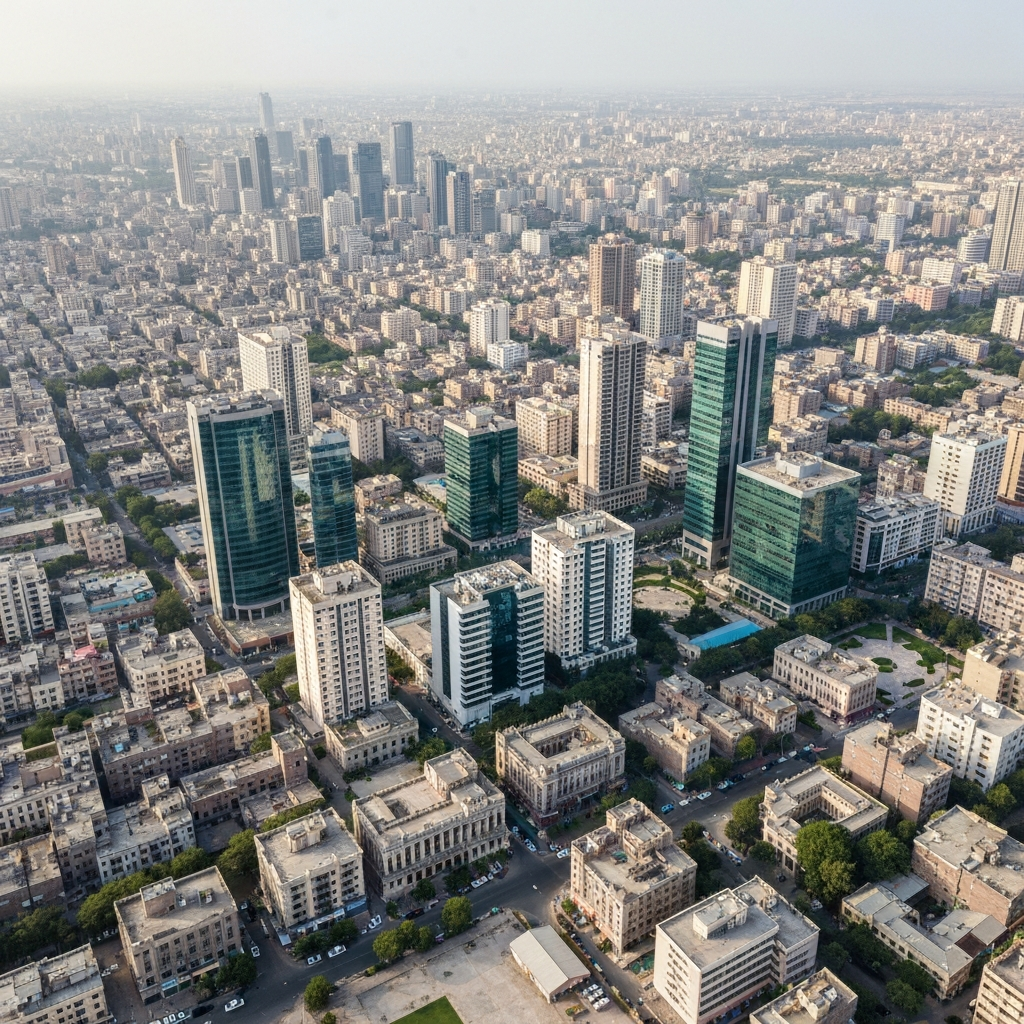
Karachi, Pakistan’s largest metropolis, has experienced significant urbanization over the past few decades. This rapid development has led to the emergence of the Urban Heat Island (UHI) effect, where urban areas become significantly warmer than their rural surroundings.
Causes of the Urban Heat Island Effect
Several factors contribute to the UHI effect in Karachi:
- Urban Design and Materials: The extensive use of concrete and asphalt in buildings and roads absorbs and retains heat, leading to higher temperatures in urban areas compared to rural regions. These materials have different thermal properties and surface radiative characteristics, altering the city’s energy balance.
- Reduction of Green Spaces: The expansion of built-up areas has often come at the expense of green spaces. Vegetation plays a crucial role in cooling the environment through shade and evapotranspiration. The loss of green areas exacerbates the UHI effect.
- High-Density Construction: The proliferation of high-rise buildings can obstruct natural airflow, reducing ventilation and trapping heat within the city. This architectural trend contributes to elevated urban temperatures.
Impacts on Karachi
The UHI effect has several implications for Karachi:
- Increased Energy Consumption: Higher temperatures lead to greater use of air conditioning, resulting in increased energy demand and associated costs.
- Health Risks: Elevated temperatures can pose health risks, particularly to vulnerable populations, by increasing the likelihood of heat-related illnesses.
- Environmental Degradation: The UHI effect can exacerbate air pollution and contribute to the degradation of urban ecosystems.
Mitigation Strategies
Addressing the UHI effect requires a multifaceted approach:
- Enhancing Green Spaces: Developing and maintaining urban green spaces can provide cooling effects and improve air quality. Studies have shown that parks in Karachi can have a cooling distance of up to 250 meters, highlighting their effectiveness in mitigating heat.
- Implementing Heat Action Plans: Developing comprehensive heat action plans can help prepare for and respond to extreme heat events, reducing health risks and improving urban resilience.
- Promoting Sustainable Urban Planning: Incorporating climate-sensitive designs and materials in urban planning can help reduce heat absorption and improve ventilation, mitigating the UHI effect.
By understanding the causes and impacts of the UHI effect, Karachi can implement effective strategies to create a more sustainable and livable urban environment.