

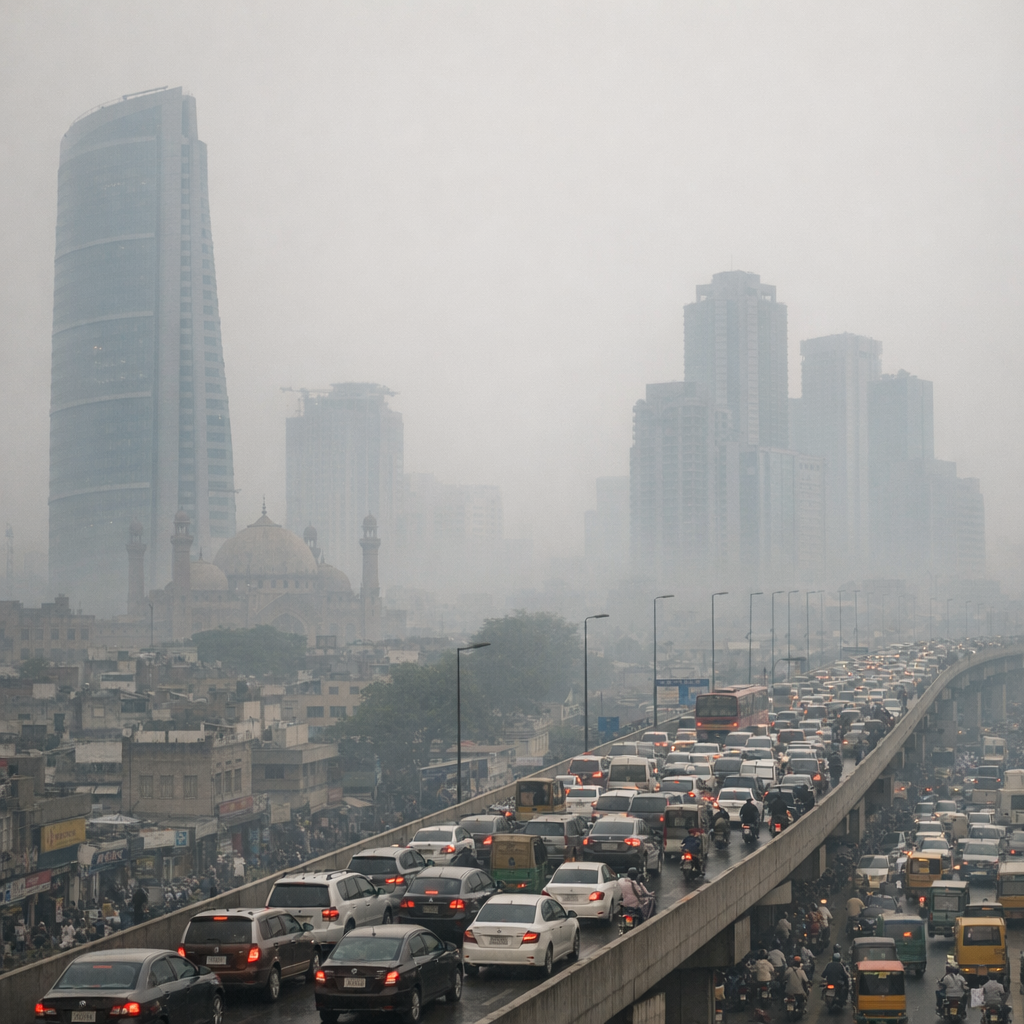
Lahore, once celebrated as the ‘City of Gardens,’ is now grappling with significant environmental challenges that threaten its livability and the health of its residents. Rapid urbanization, industrial emissions, and vehicular pollution have led to deteriorating air quality and rising temperatures, necessitating immediate and sustainable interventions.
Escalating Air Pollution
The city’s air quality has reached alarming levels, with Air Quality Index (AQI) readings frequently surpassing hazardous thresholds. In recent years, Lahore has been ranked among the most polluted cities globally, with AQI levels occasionally exceeding 1,900, far above the World Health Organization’s safe limit of 300. This severe pollution is primarily attributed to industrial emissions, vehicular exhaust, and the burning of crop residues in surrounding areas.
Urban Heat Island Effect
Rapid urbanization has also intensified the Urban Heat Island (UHI) effect in Lahore. The proliferation of high-rise buildings and the reduction of green spaces have led to increased local temperatures. Studies indicate that land use and land cover changes have significantly altered the city’s surface energy balance, resulting in higher temperatures and altered wind patterns. This exacerbates the heat stress experienced by residents, particularly during the summer months.
Health Implications
The environmental degradation in Lahore has profound health implications. Prolonged exposure to polluted air increases the risk of respiratory and cardiovascular diseases among the population. Vulnerable groups, such as children and the elderly, are particularly at risk. Additionally, the intensified UHI effect contributes to heat-related illnesses, further straining the city’s healthcare infrastructure.
Path Forward
Addressing Lahore’s environmental challenges requires a multifaceted approach. Implementing stringent regulations to control industrial emissions, promoting the use of cleaner fuels, and enhancing public transportation can significantly reduce air pollution. Urban planning should prioritize the development of green spaces and the adoption of climate-responsive architectural designs to mitigate the UHI effect. Public awareness campaigns are also essential to encourage community participation in environmental conservation efforts.
In conclusion, while Lahore’s environmental challenges are daunting, they are not insurmountable. Through concerted efforts by the government, private sector, and civil society, the city can reclaim its status as a vibrant and healthy urban center.