

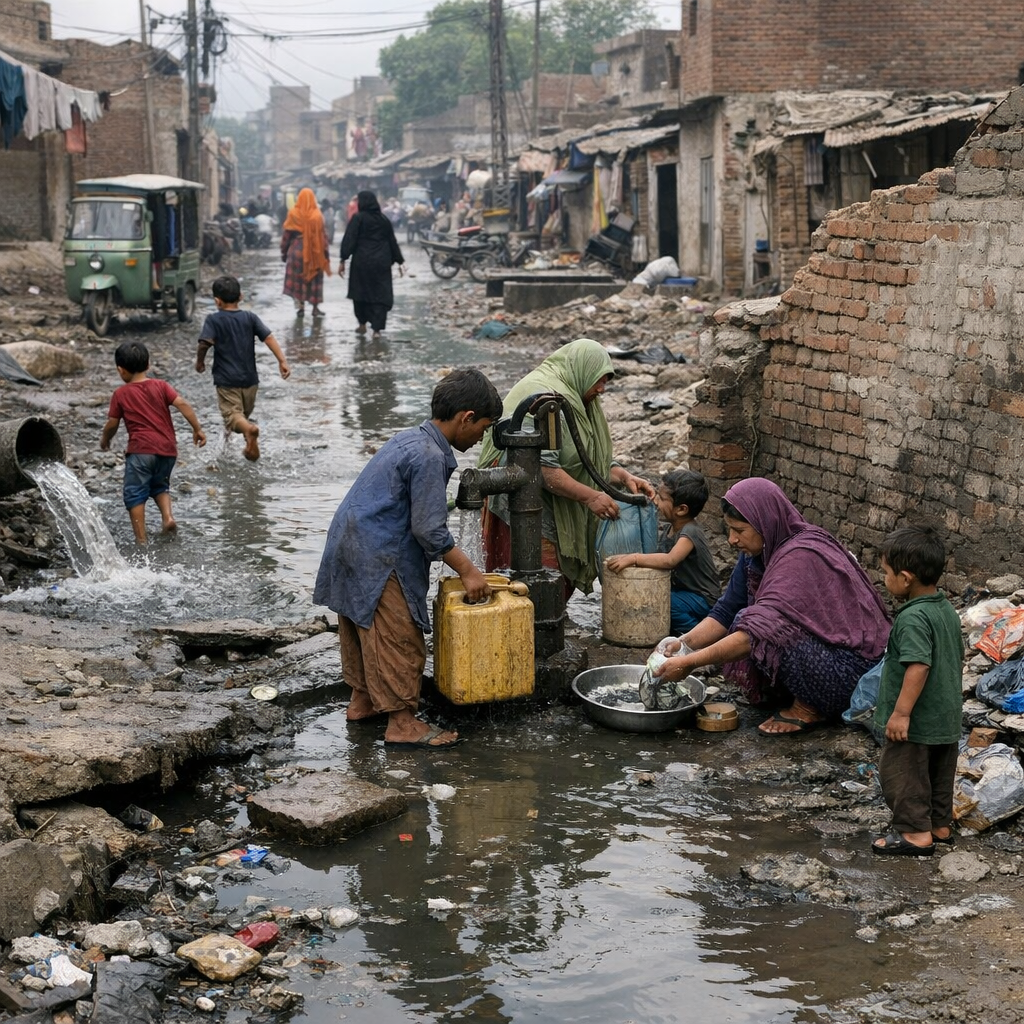
Lahore, Pakistan’s second-largest city, is grappling with critical water and sanitation challenges that have far-reaching implications for its residents. Recent studies have highlighted systemic issues in the provision of these essential services, underscoring the need for comprehensive and inclusive solutions.
Fragmented Service Delivery
A fact-finding study by the Human Rights Commission of Pakistan (HRCP), in collaboration with the European Union, has revealed serious violations of basic human rights norms in the design and delivery of water, sewerage, and drainage services in Lahore. The report points to uncoordinated and fragmented operations among various agencies, leading to inefficiencies and a lack of accountability. The absence of a legislatively mandated local government exacerbates these issues, removing clear structures for citizen representation and oversight. Source
Health Risks from Contaminated Water
Residents in multiple neighborhoods have reported serious concerns about water contamination. Some individuals have suffered oral and skin infections after using water supplied through the Water and Sanitation Agency (WASA) field offices via tubewells. In areas like Green Town and Johar Town, residents have experienced health issues attributed to contaminated water caused by leakage of sewage pipes. Source
Disproportionate Impact on Marginalized Communities
The HRCP study emphasizes that low-income and marginalized groups are disproportionately affected by inadequate water and sanitation services. The city’s outdated infrastructure and failing drainage systems have led to recurring urban flooding and inadequate access to safe water and sanitation facilities, issues that disproportionately affect these communities. Source
Call for Coordinated Action
Addressing Lahore’s water and sanitation challenges requires a coordinated approach involving all stakeholders. The HRCP urges the recognition of civic services as fundamental rights and calls for the establishment of clear structures for citizen representation, oversight, and responsiveness in municipal affairs. By fostering collaboration among government agencies, civil society organizations, and the community, Lahore can work towards equitable and sustainable solutions that ensure access to clean water and adequate sanitation for all its residents. Source