

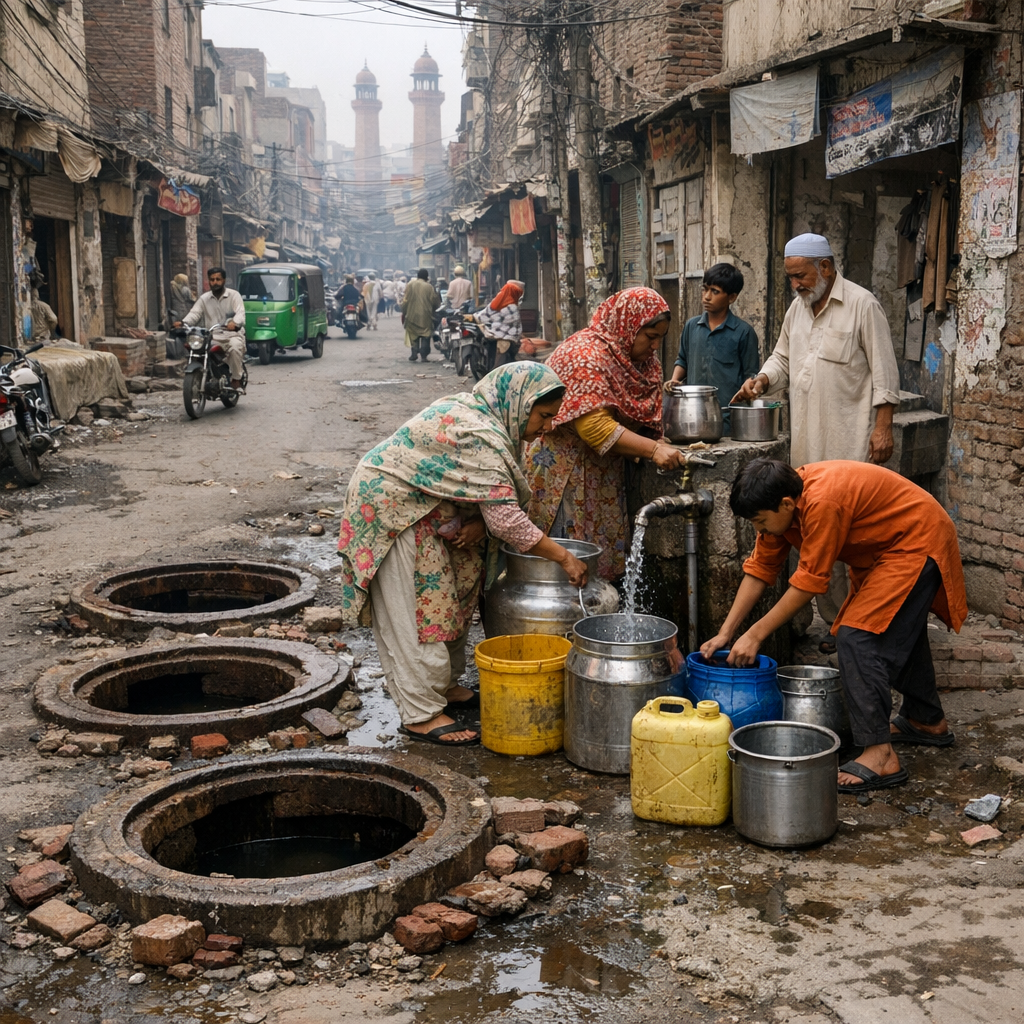
Lahore, Pakistan’s second-largest city, is grappling with significant water and sanitation challenges that impact the daily lives of its residents. Open manholes and contaminated water supplies have become pressing concerns, leading to health risks and public outcry.
Open Manholes: A Persistent Hazard
In various neighborhoods, open manholes pose serious dangers to pedestrians and motorists. Despite previous incidents, including a tragic event at Bhati Chowk where a woman and her child lost their lives after falling into an uncovered manhole, many covers remain missing. Residents report that these hazards are often ignored until accidents occur, highlighting a need for proactive measures.
Contaminated Water Supply
Alongside infrastructure issues, water contamination is a growing problem. Residents in areas like Green Town and Johar Town have reported health issues, including oral infections, attributed to polluted water. Some have resorted to installing deep bore pumps at personal expense to access clean water, underscoring the inadequacy of the current supply system.
Governance and Accountability
A study by the Human Rights Commission of Pakistan (HRCP) and the European Union (EU) has identified serious violations in the design and delivery of water and sanitation services in Lahore. The report points to fragmented service delivery and a lack of coordination among agencies, resulting in inefficient use of resources and diminished public trust.
Moving Forward
Addressing these challenges requires a coordinated effort from all stakeholders. The Water and Sanitation Agency (WASA) has acknowledged the issues and emphasized the need for third-party validation to ensure accurate reporting and accountability. Residents are calling for immediate action to repair open manholes and improve water quality to safeguard public health.
As Lahore continues to grow, it is imperative that infrastructure development keeps pace with the city’s needs. Ensuring access to safe water and a reliable sanitation system is not only a matter of public health but also a fundamental human right that must be upheld.