

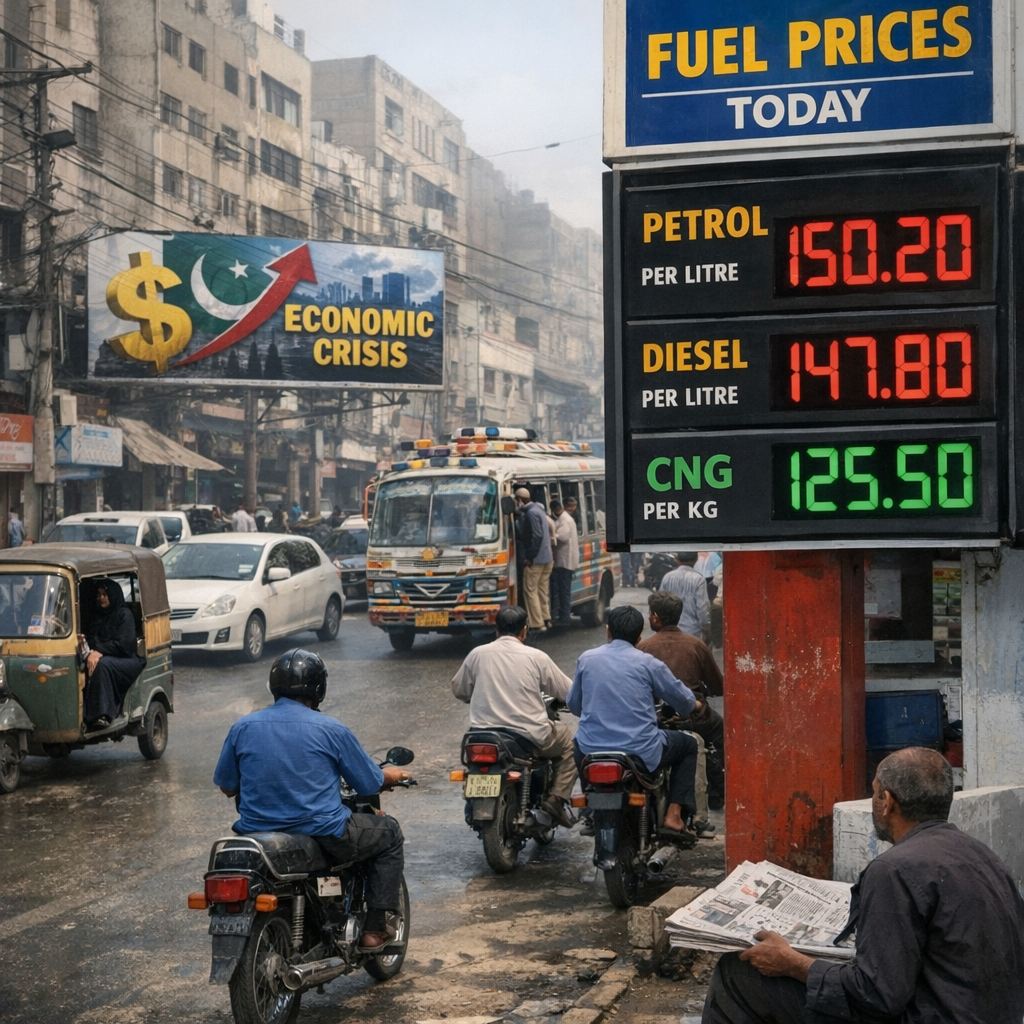
In an increasingly interconnected world, global economic developments have profound implications for national economies. For Pakistan, recent global trends present both challenges and opportunities that warrant close examination.
Rising Global Oil Prices
The escalation of conflicts in the Middle East has disrupted energy supply chains, leading to a surge in global oil prices. As a country that imports approximately 85% of its crude oil, Pakistan is particularly vulnerable to such fluctuations. A $10 increase in global oil prices could widen Pakistan’s current account deficit by $1.5 to $2 billion, potentially reversing recent improvements in the external account. Additionally, higher oil prices contribute to inflationary pressures, with every $10 increase adding approximately 0.5 to 0.6 percentage points to inflation. This poses a risk to the economic stability achieved in recent years. Source
Global Interest Rates and Financing Conditions
Prolonged high global interest rates are tightening financial conditions across emerging markets, including Pakistan. The International Monetary Fund (IMF) projects Pakistan’s economy to grow by around 3.6% in 2026, with inflation expected to hover near 7.2%. Elevated borrowing costs and global uncertainty could constrain capital inflows and complicate external financing for developing economies. Pakistan’s gross external financing needs are estimated at approximately $19.4 billion for fiscal year 2025-26, underscoring continued reliance on external funding. The cost of servicing this debt is mounting, with external public debt interest payments surging from $1.99 billion in FY2022 to $3.59 billion in FY2025. Source
Regional Conflicts and Economic Outlook
The ongoing Middle East conflict has affected global markets by disrupting supply chains, influencing commodity prices, and weakening business confidence. These developments introduce additional risks for economies dependent on energy imports, such as Pakistan. Rising international oil prices are already being transmitted into domestic inflation, altering the baseline price situation. The global economic outlook reflects emerging challenges, with the Middle East, North Africa, Afghanistan, and Pakistan region facing conflict that exacts a serious human and economic toll, heightening geopolitical uncertainty. Disruptions to key energy supply routes and infrastructure have affected markets, driven financial volatility, and weakened the 2026 growth outlook. Source
Path Towards Sustainable Growth
Despite these challenges, Pakistan has embarked on a transformative journey towards economic stabilization and growth. Recognizing the gravity of the situation, the country implemented a series of reforms, including tightening fiscal policies and curbing inflation. Central to this effort is ‘Uraan Pakistan,’ an economic transformation plan that aims for sustainable, export-led 6% GDP growth by 2028. Global stakeholders are invited to support Pakistan’s journey by investing in priority sectors such as agriculture, IT, renewable energy, and pharmaceuticals. Source
In conclusion, while global economic shifts present significant challenges to Pakistan’s economy, they also offer opportunities for strategic reforms and investments. By addressing structural inefficiencies and fostering sustainable growth, Pakistan can navigate these global trends to achieve long-term economic stability.