

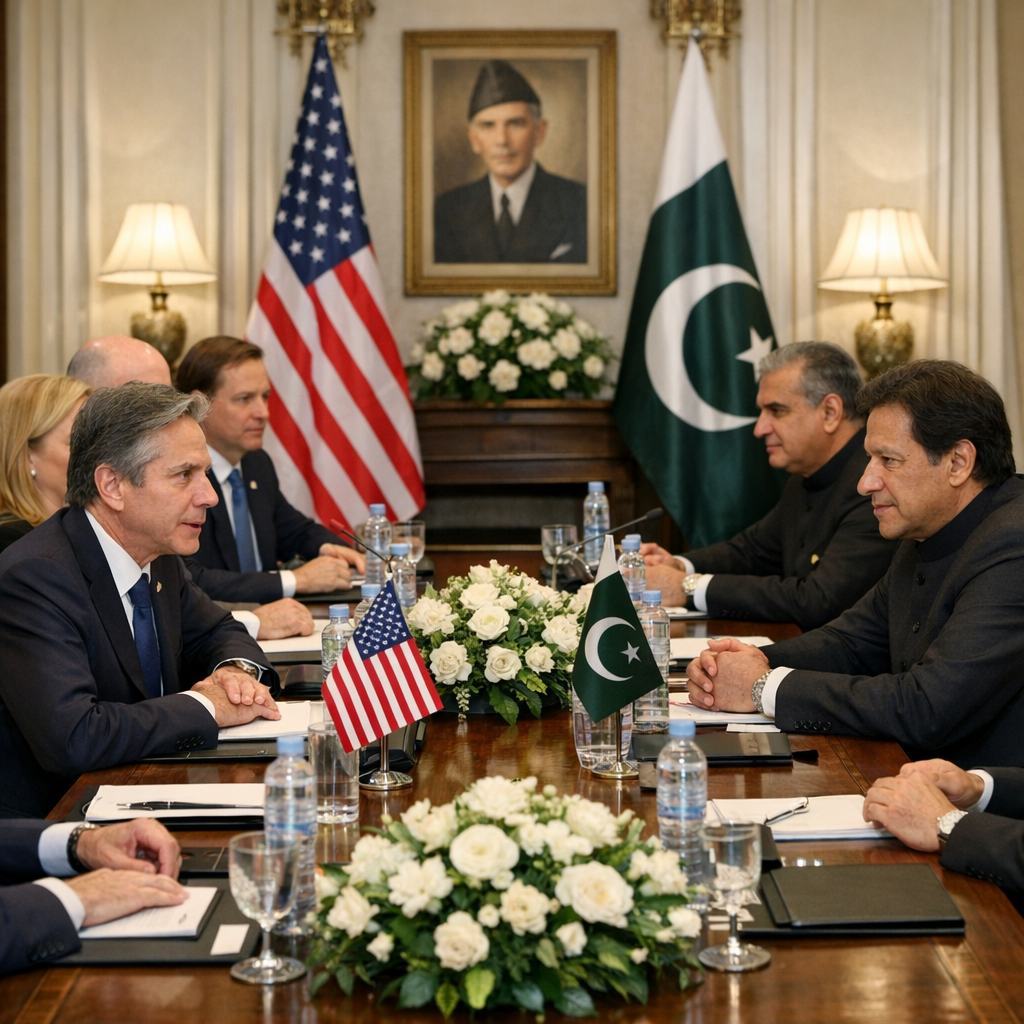
The relationship between the United States and Pakistan has been multifaceted, characterized by periods of close collaboration and times of tension. Understanding this dynamic is crucial for comprehending the broader geopolitical landscape.
Historical Overview
Since Pakistan’s independence in 1947, the U.S. has been a significant partner. Early alliances during the Cold War saw Pakistan joining U.S.-sponsored defense organizations like SEATO and CENTO. However, events such as the 1965 Indo-Pakistani War and Pakistan’s nuclear ambitions in the late 20th century introduced strains into the relationship.
Economic Interactions
The U.S. has been a major destination for Pakistani exports, particularly in textiles. However, recent U.S. tariff increases have posed challenges, potentially reducing Pakistan’s exports by 20–25%, which equates to a loss of approximately $1.1–1.4 billion annually. This development underscores the need for Pakistan to diversify its export markets and enhance domestic economic resilience.
Military Cooperation
Military ties have been a cornerstone of U.S.-Pakistan relations. Pakistan’s designation as a major non-NATO ally in 2002 facilitated military aid and joint operations. However, concerns over Pakistan’s alleged support for certain militant groups have led to suspensions of U.S. military aid in recent years, prompting Pakistan to seek defense partnerships elsewhere, notably with China.
Current Diplomatic Landscape
In recent years, both nations have engaged in dialogues to address mutual concerns, including counterterrorism efforts and regional stability. The evolving geopolitical environment, especially in the aftermath of the U.S. withdrawal from Afghanistan, necessitates a recalibration of strategies to foster a more stable and cooperative relationship.
Conclusion
The U.S.-Pakistan relationship is emblematic of the complexities inherent in international diplomacy. While challenges persist, opportunities for collaboration in areas like trade, security, and regional development remain. A nuanced understanding of each other’s priorities and concerns will be pivotal in shaping the future trajectory of this bilateral relationship.