

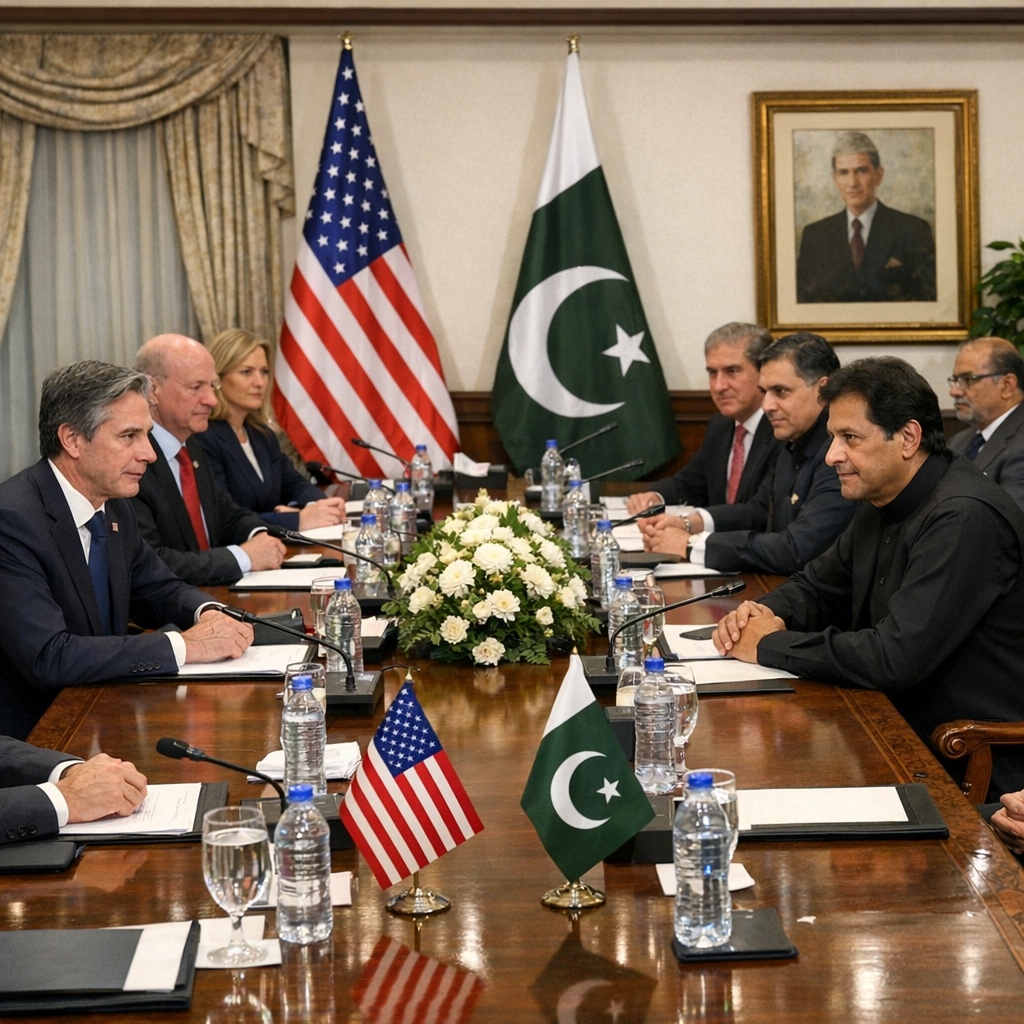
The relationship between the United States and Pakistan has been characterized by periods of close cooperation and significant challenges. Established on August 15, 1947, just a day after Pakistan’s independence, the two nations have engaged in a complex partnership influenced by geopolitical shifts, economic interests, and regional security concerns.
Historical Overview
In the early years, Pakistan aligned with the U.S. during the Cold War, becoming a member of the Southeast Asia Treaty Organization (SEATO) in 1954 and the Central Treaty Organization (CENTO) in 1955. This alliance was driven by mutual interests in countering Soviet influence in the region. However, the relationship experienced strains, notably during the Indo-Pakistani War of 1965, when the U.S. suspended military support to Pakistan, leading to feelings of abandonment among Pakistanis.
Economic Interactions
Economically, the U.S. has been a significant partner for Pakistan. The United States has been one of the largest sources of foreign direct investment in Pakistan and remains Pakistan’s largest export market. However, challenges persist, including regulatory hurdles and the need for structural reforms to attract sustained investment.
Current Dynamics
In recent years, the U.S.-Pakistan relationship has evolved, particularly in the context of regional security and economic cooperation. The U.S. has provided substantial COVID-19 vaccine doses to Pakistan and continues to support educational exchanges, reflecting a commitment to people-to-people ties.
However, the relationship faces challenges, including concerns over regional stability and differing strategic priorities. Both nations continue to engage in dialogues to address mutual concerns and explore avenues for cooperation.
Conclusion
The U.S.-Pakistan relationship remains multifaceted, shaped by historical ties, economic interactions, and evolving geopolitical dynamics. While challenges persist, ongoing engagement and dialogue offer pathways to strengthen this important bilateral relationship.